3D & Interactive Websites · South Africa

Websites People
Remember.

Most websites are read. A few are explored. We build the second kind — scroll-driven 3D worlds, cinematic product journeys and interactive sales tools for South African brands who need to be the one that gets talked about in the meeting afterwards.

When a 3D site is worth it — and when it isn't.

We will talk you out of this as readily as into it. An immersive build is the right call in a narrow set of situations, and an expensive mistake outside them.

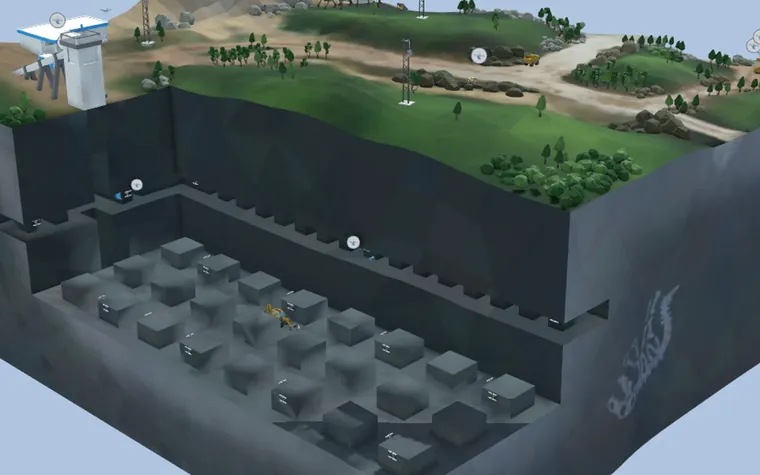
It works when the product is hard to explain. Rajant's kinetic mesh networking is invisible infrastructure — a self-healing radio network across a working mine. No brochure makes that land. Put a prospect inside a 3D mine where the links animate between nodes, and they understand it in seconds.

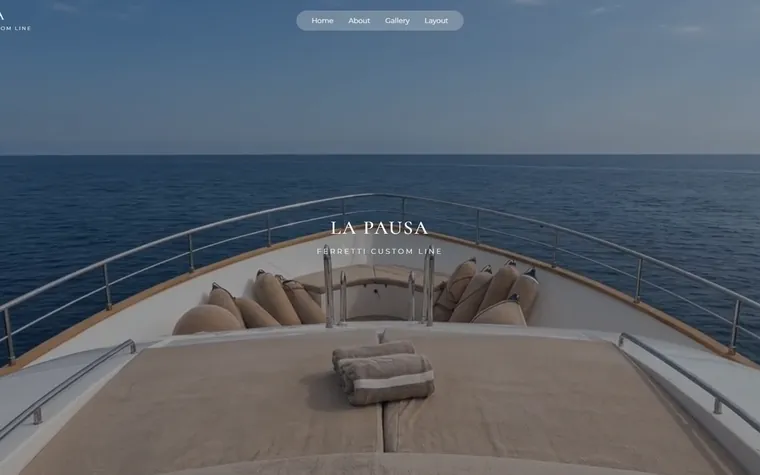
It works when the purchase is emotional and high-value. A 26-metre charter yacht isn't bought off a spec sheet. It's bought on a feeling. A continuous scroll-driven film does what photography on a grid cannot.

It does not work for a brochure site, a local service business, or anything where the buyer just wants a price and a phone number. If someone is searching for a plumber, a 3D experience is a barrier, not an asset. We would build you a fast, conventional site instead — and we would tell you so up front.

01

Complex or invisible products

Industrial systems, networks, machinery, engineering services — anything where the value is real but you cannot photograph it.

02

High-consideration purchases

Yachts, property, luxury goods, capital equipment. Long sales cycles where emotion and confidence do the closing.

03

Sales tools, not just sites

Something a rep opens in a meeting. The site stops being marketing and becomes the thing that wins the room.

04

Category differentiation

When every competitor's site looks the same and you need the visitor to register that you are not the same.
Three live builds. Open them.

Not concepts or showreels. Three production sites, each using a different technique because each brief needed a different one.

ScanRF Rajant Mesh — interactive 3D mine built by FUTR Agency
Blender · Verge3D · WebGL

ScanRF — Rajant Mesh

Two explorable 3D worlds — an open-pit and underground mine, and a working farm — modelled in Blender and shipped to the browser through Verge3D. Mesh links animate between nodes, a toggle strips the overlay to reveal the bare site, and any node opens a spec panel with datasheet and contact actions.

View the build →
La Pausa — scroll-cinematic charter yacht website built by FUTR Agency
Frame Sequence · Scroll Cinematic

La Pausa

A 26.22-metre Ferretti presented as one continuous scroll-driven film. A pre-rendered WebP frame sequence scrubs against scroll position, each clip cut to land on the exact frame the next one opens on, so the journey never breaks.

View the build →
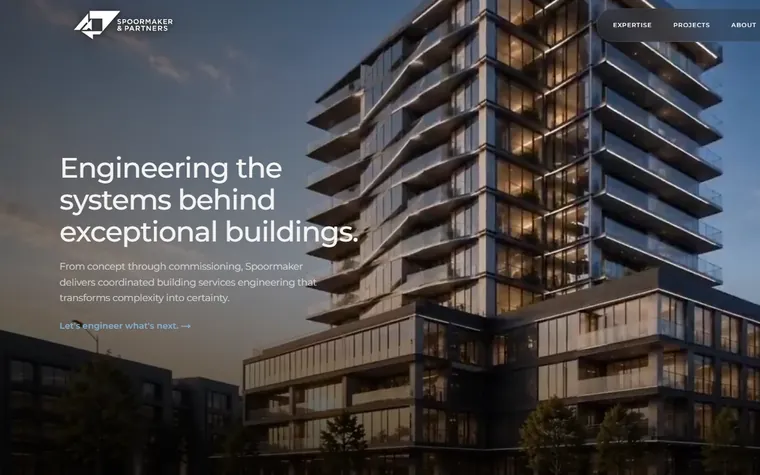
Spoormaker & Partners — motion-led engineering website built by FUTR Agency
Next.js · GSAP · Wireframe Sequence

Spoormaker & Partners

Six decades of building services engineering. The site opens on a scroll-driven wireframe sequence — engineering drawn line by line before a single photograph appears — then resolves into the practice, its landmark projects and an archive of 22 registered patents.

View the build →

The techniques, plainly.

"3D website" covers several very different approaches with very different costs and trade-offs. Any agency quoting you without naming which one they mean is guessing.

A

Real-time WebGL

Genuine 3D running in the browser — the visitor orbits, clicks and explores. Built in Blender, delivered via Verge3D or Three.js. The most capable and the most demanding. Right for configurators, digital twins and explorable environments.

B

Scroll-scrubbed frame sequence

A cinematic pre-rendered frame by frame, then scrubbed against scroll. Looks flawless on any device because the hard rendering already happened. Right for linear storytelling where you control the journey.

C

Motion-led conventional build

A fast, normal site with choreographed motion doing the heavy lifting — GSAP, scroll triggers, sequenced reveals. Far cheaper, far lighter, and honestly enough for most briefs that arrive asking for 3D.

We start by working out which of these you actually need. Often it is C. Occasionally it is A, and when it is, the result is something no competitor in your category has.

Honest answers to the hard questions.

Will a 3D website hurt my SEO?

It can, badly, if built carelessly — and most are. Content locked inside a 3D canvas or injected purely by JavaScript is invisible to Bing and to AI crawlers like GPTBot and PerplexityBot, which generally do not execute JavaScript at all. We build the content layer as real, server-rendered HTML with full structured data, and treat the 3D as presentation on top. You get the experience without trading away the search visibility.

How much does a 3D or interactive website cost in South Africa?

It depends entirely on which technique the brief actually needs. A motion-led conventional build sits close to a normal premium website. A scroll-scrubbed cinematic adds the cost of rendering the sequence. A full real-time WebGL environment — modelling, texturing, interaction logic — is a different order of project again. We scope it in that order deliberately, so you are not paying for WebGL when choreographed motion would have done the job. We will give you a firm number after a short discovery conversation.

Will it work on phones and slower connections?

This is the question that decides the technique. South African mobile data is expensive and coverage is uneven, so a heavy WebGL scene that delights on a desktop can be unusable in the field. We set a performance budget before we choose an approach, and frequently pick a lighter technique because of it. A site nobody can load is not a differentiator.

How long does a build take?

A motion-led build runs on a normal website timeline. Cinematic and real-time 3D builds take longer, because the modelling and rendering happen before any web work begins — that production time is the bulk of the schedule, not the code.

Do you build these for clients outside Johannesburg?

Yes. FUTR Agency is based in Johannesburg and works across South Africa — Cape Town, Durban, Pretoria — and internationally. Two of the three builds above serve clients operating outside South Africa.

Can you work with our existing 3D assets?

Usually. If you already have CAD models, product renders or Blender files, that removes the most expensive part of the project. Send us what you have and we will tell you honestly whether it is usable or whether rebuilding is faster.

Tell us what you're trying to sell.

We will tell you whether an immersive build is the right answer — including when it isn't. No retainer pitch, no jargon.